



By Wayne Kerr
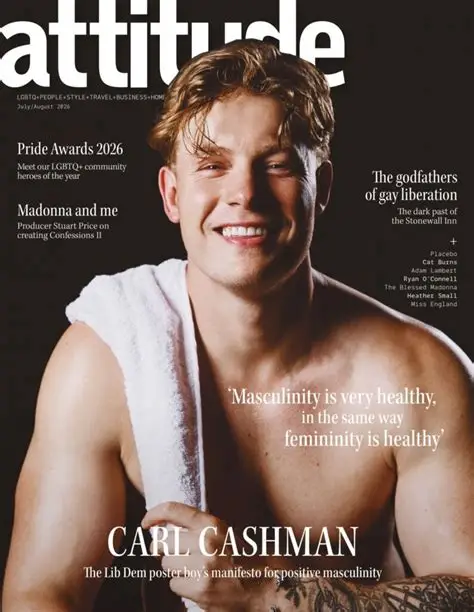
A straight politician on the cover of Attitude magazine during Pride. A carefully styled photoshoot. A message of allyship. And a growing sense of unease among the very community he claims to support.
Carl Cashman’s appearance on the front of Attitude — the UK’s best-selling LGBT+ magazine — has sparked a fierce debate about where allyship ends and exploitation begins.
The queerbaiting question
For many in the LGBTQ+ community, the cover is not a celebration. It’s a transaction.
One LGBT+ activist said: “Why are we featuring straight men on the cover of an LGBT+ magazine for Pride? It’s not about representation. It’s about using our community’s aesthetics — the sex appeal, the queer coding — to build a fanbase. And for what? Political gain.”
Another added: “This is queerbaiting, plain and simple. He’s not one of us. He’s a straight politician who knows that appearing on the cover of Attitude will win him votes and support. It’s a marketing campaign dressed up as allyship.”
Allyship or exploitation?
Supporters say Cashman has a genuine record of supporting LGBT+ causes. They argue that allyship should be welcomed, not rejected. But critics say there’s a fine line between standing with the community and using it.
One source said: “There’s a difference between showing up for Pride and using Pride to sell yourself. When a straight politician poses on the cover of a gay magazine, you have to ask: who benefits? Because it’s not us.”
Another added: “He gets the cover. He gets the attention. He gets the votes. And what do we get? A photo of a straight man using our aesthetics to look progressive. It’s not allyship. It’s a transaction.”
The wider problem
The controversy is not just about Cashman. It’s about a pattern. Straight celebrities, politicians, and brands increasingly use LGBTQ+ aesthetics — the imagery, the language, the visual codes — to signal progressiveness without actually being part of the community.
One LGBT+ campaigner said: “It happens every Pride. Straight people climb onto our floats, pose for our magazines, and use our community as a backdrop. Then June ends and they disappear. Cashman’s cover is just the latest example.”
The defence
Those close to Cashman insist his intentions are genuine. They point to his voting record and his public support for LGBT+ rights.
But for many in the community, genuine allyship doesn’t require a magazine cover.
One activist said: “If he really cared, he wouldn’t need to be on the front of Attitude. He’d do the work quietly. He’d show up when the cameras weren’t there. Instead, he’s made Pride about him. And that’s the problem.”
The question remains
Is Carl Cashman an ally? Or is he using the LGBTQ+ community as a transactional voting bloc?
The answer depends on who you ask. But one thing is clear: the cover has sparked a conversation that won’t be silenced.
As one critic put it: “Allyship isn’t a photoshoot. It’s not a magazine cover. It’s what you do when no one’s watching. And right now, we’re all watching him.”
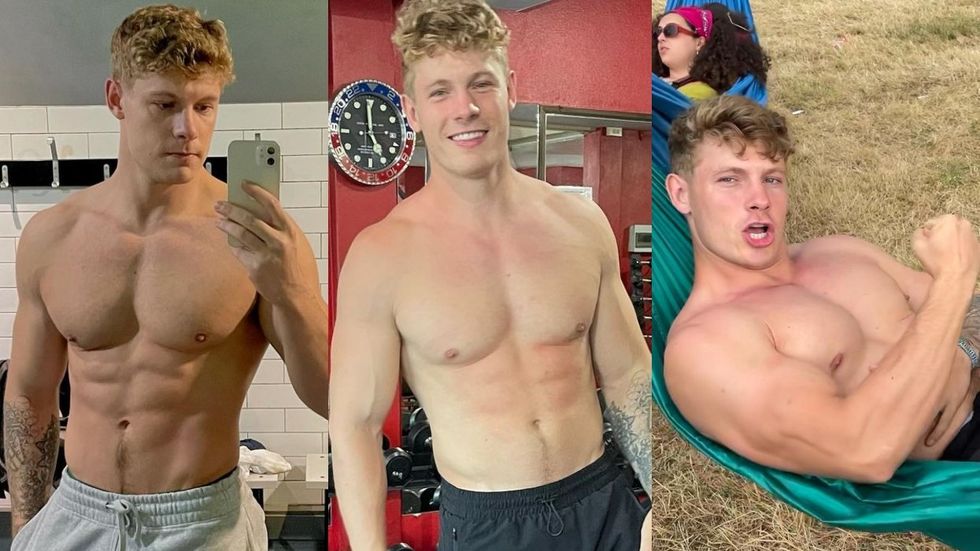
Many will ask who is carl Cashman
He was young. He was ambitious. He was once dubbed one of “Britain’s hottest politicians.” And while his council seat slipped away, he was partying at a Spanish music festival.
This is the story of Carl Cashman’s early years in politics — the story they hoped you’d forget.
The Benicassim problem
The date was set. A key meeting of Knowsley Town Parish Council. The kind of meeting that matters — the kind where decisions are made, votes are counted, and councillors are expected to show up.
Carl Cashman didn’t show up. He was at the Benicassim music festival on Spain’s Costa del Azahar.
According to a spokesperson from the town council, Cashman — the leader of Knowsley Lib Dems — was disqualified after failing to attend meetings for six months, including one held while he was enjoying the Spanish sunshine.
But Cashman tells a different story. He insists he was not removed. He says he resigned.
The resignation he denies
In a statement that raised more questions than it answered, Cashman said: “I resigned my seat because I had too many commitments and needed to focus my work on the people of Knowsley Village and Prescot as a borough councillor.”
Too many commitments. So many commitments, in fact, that he couldn’t attend a single meeting for six months.
Critics at the time noted the timing. The town council said he was disqualified. Cashman said he resigned. Somewhere between the two accounts lay the truth.
‘One of Britain’s hottest politicians’
Cashman’s political career has always been accompanied by a certain amount of attention — and not all of it about policy.
In May 2016, he was one of three Lib Dem councillors who ended four years of total Labour control in Knowsley when he was elected in Prescot North. He had a Masters degree in Philosophy from Liverpool University. He campaigned passionately against building on Greenbelt land and for the UK to remain in the European Union.
But what really got him noticed was something else entirely.
Cashman was once featured on a blog post called “Fit Councillors.” The title stuck. He was dubbed one of “Britain’s hottest politicians” — a label that followed him into every interview, every profile, and every campaign.
His response at the time? “As flattering as this is, my efforts are focused on the people of Prescot and Knowsley.”
The allowances question
Cashman made a point of noting that Knowsley Town Council was “one of the only parish councils in the country to pay their councillors an allowance.” He claimed he did not take any allowances and donated them to charity in his first year.
It was a noble gesture. But it also served a purpose — positioning Cashman as the principled outsider, the young reformer who wouldn’t take the money.
The pattern
Looking back, the Benicassim episode reveals a pattern that critics say has defined Cashman’s career: a carefully managed image, a willingness to deny inconvenient truths, and a habit of being somewhere else when the hard work needs doing.
One political observer said: “He’s always been good at the optics. The photos, the campaigns, the ‘fit councillor’ stuff. But when it comes to the unglamorous work — the meetings, the votes, the showing up — that’s where the story gets murkier.”
Another added: “The town council said he was disqualified. He said he resigned. That’s a pretty fundamental disagreement. And it tells you everything about how he handles scrutiny.”
The question
Years later, Carl Cashman is still in politics. Still campaigning. Still courting attention.
But the question remains: was he removed from his post, or did he walk away on his own terms?
And perhaps more importantly: why does the story keep changing?
As one critic put it: “You can’t be in two places at once. But Carl Cashman has spent his career trying. He wants the spotlight, but not the scrutiny. He wants the platform, but not the meetings. And sooner or later, people notice.”